Inanna Institute
We work at a threshold between worlds—between prison and freedom, grief and renewal. Inspired by the Sumerian goddess Inanna’s descent to the underworld, our programs accompany women as they navigate profound transformations of incarceration and re-entry.We believe that healing begins when we are witnessed, not fixed; when we can rest in the depth of our stories and allow something new to be born.We believe that we are interconnected by our grief, and that when one person holds grief we all hold it, and when we tend to grief we all benefit.
Emerging from nearly two decades of Shanti volunteer grief support at the Washington Corrections Center for Women, Inanna Institute was formally established as a Washington state nonprofit to support incarcerated individuals through grief, loss, and life transitions. Through Inanna, trained volunteers provide confidential, nonjudgmental one-to-one listening, peer support circles, expressive arts programs, and related education.Inanna also seeks to expand access to these supports for individuals impacted by systems of isolation, marginalization, or confinement in the community through a network of trained volunteer partners dedicated to presence, dignity, and compassionate engagement.
support our work
We are deeply grateful to the early supporters who helped us meet our goal of $2,000 through Inanna’s first donor campaign. Your generosity helped cover mileage costs for Inanna's director to continue providing confidential listening support and other services at the Washington Corrections Center for Women in 2025 and 2026.Inanna is now seeking grant funding and individual donations to extend confidential listening and peer support to women in work release while building the operating foundation for the coming year. Your donation helps train volunteer listeners, facilitate trauma-informed writing, painting, and grief workshops, and offer compassionate presence to women navigating isolation, grief, and transition during incarceration and as they return to the community. Each contribution strengthens a network of care, affirming every woman’s inherent worth, connection, and belonging.Listening is how we see and remember one another again.
Mission
We hold space for people navigating descent, healing, and return. We offer places where people can be witnessed without judgment, reclaim their voice and inner knowing, and rediscover meaning.We believe that listening itself can be an act of liberation—a quiet sanctuary that restores dignity and the capacity to grieve, dream, and rejoin the world whole.Rooted in the mythic journey of Inanna, our programs honor every person’s lived experience as sacred, a passage through loss and renewal.Vision
We envision a culture that makes space for descent—where grief is shared, dreams are valued, and those returning from incarceration and isolation are met with respect and belonging.Our work reclaims the ancient logic of renewal: that out of dismemberment we can re-member; out of loss, we can re-weave community.By building sanctuaries, both real and symbolic, we help transform carceral spaces into sites of awakening and compassion.Join us.
Please join our mailing list
We would love to hear from you and update you as we build a community of support for this work. Please share your contact information below.
Our Team
Kate Petty, Founder and Director
Kate Petty is the Founder and Executive Director of Inanna Institute in Washington. She began volunteering at the Washington Corrections Center for Women in 2007 where she developed a long-standing practice of providing confidential, nonjudgmental listening support to incarcerated women. An artist, astrologer, and interdisciplinary practitioner, she brings three decades of experience studying and practicing complementary and holistic approaches to wellness, recovery, and building a life worth living. Her work is relational, eco-humanistic, strengths-based, and trauma- and grief-informed, with a deep respect for autonomy, lived experience, agency, and each person’s capacity for change. Kate is an Associate Mental Health Counselor. She holds a Master of Arts in Advanced Addiction Counseling and Treatment, with additional graduate coursework in family systems and attachment-based therapies, and received her BA from The Evergreen State College.
Board of Directors
Kristin Meyer, Board President and Volunteer
Kristin Meyer is a grief tender, advocate, and death doula who seeks to stand near the thresholds where lives shift, witnessing what is crumbling and what is forming. For the past 15 years, she has served as a volunteer with the Shanti program, offering one-on-one grief support to individuals within the correctional system—first at the King County Jail and currently at the Washington Corrections Center for Women in Gig Harbor. Driven by a deep commitment to sacred witnessing through major life transitions, Kristin also founded Grief Temple, a communal space supporting women through collective grief tending.Kristin holds a BA in Women’s Studies from the University of Wisconsin–Madison. Her background includes advocacy for domestic violence survivors in Minneapolis, residential care for adults with disabilities at Innisfree Village in Virginia, and program coordinator at the ROOTS Young Adult Shelter in Seattle. Trained as a death doula with A Sacred Passing, Kristin brings a rich history of compassionate accompaniment to those navigating major thresholds of loss and transformation.
Alyssa Knight
Alyssa Knight is a co-founder and Executive Director of Freedom Education Project Puget Sound (FEPPS). She has been a part of the program’s concept and implementation since its inception during her 17 year incarceration, and she continues to shape and support the program today. After graduating with the first class of FEPPS students in 2016, she went on to build a gender education program inside the prison and to contribute to major policy changes that continue to support and protect gender nonconforming incarcerated individuals in Washington state. After receiving commutation from Governor Inslee in 2021, Alyssa went on to graduate from the University of Washington with a degree in Gender, Women, and Sexuality Studies. She focused her research on an autoethnographic account of exploring the archives of the incarceration of women and girls in this state. Currently, she is spearheading the expansion of FEPPS into holistic reentry supports and professional development opportunities for long term student persistence and success.
Julia Raban
Jeff Petty, Board Secretary
After an earlier career as a mountaineering instructor, Jeff has worked in and around public secondary schools for the past 30 years as a teacher, school coach, principal, and consultant. In 2005 Jeff founded Highline Big Picture High School (now 6-12), a competency-based public school with no grades, no credits, and where each student develops a unique learning plan around their interests and then spends much of their time “leaving to learn” in community-based internships. As a regional director for Big Picture Learning, he helped start several new schools, supported regional innovation networks, and developed a leadership incubator for principals designing mold-breaking public schools. Jeff holds a BA in Biology from Princeton University, an MEd from the Harvard Graduate School of Education, and a principal credential from the University of Washington.
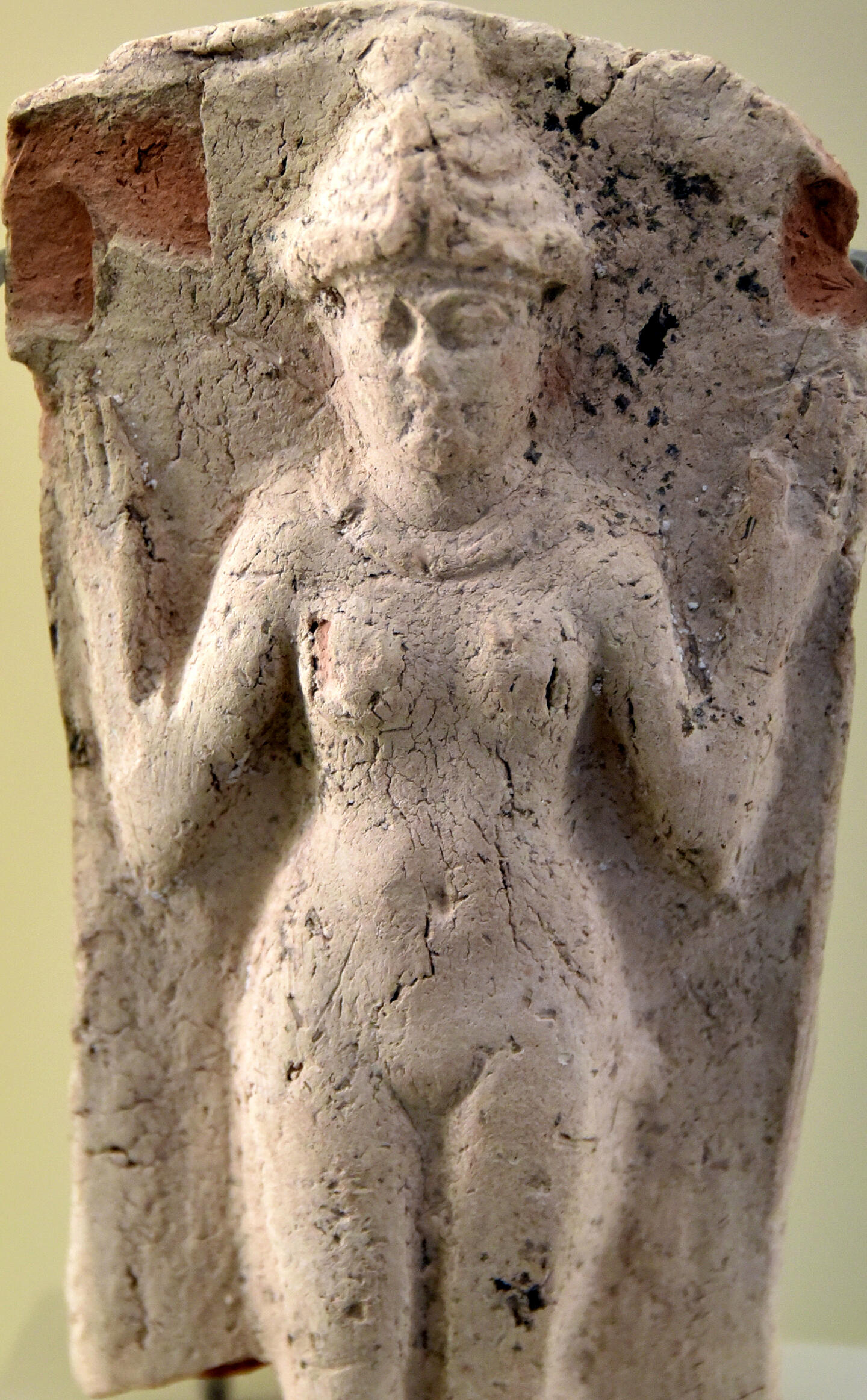
Image: Terracotta plaque, showing the goddess Ishtar (Inanna), wearing the horned headdress and a necklace. 19th-17th century BCE. From Iraq. Pergamon Museum, Berlin, Germany.
Data
Approximately 80% of incarcerated women in Washington self-report significant trauma histories and correspondingly high rates of PTSD at intake. This mirrors national trends: most justice-involved women have experienced sexual violence or exploitation before incarceration, forming what researchers term the abuse-to-prison pipeline.Brodie, L., & Carei, R. (2019). How to develop and sustain a cohesive, effective, clinical team [Conference presentation handout]. Washington Council for Behavioral Health. https://www.thewashingtoncouncil.org/wp-content/uploads/2019/05/T301-w.pdf
Dichter, M. E. (2015). Women’s experiences of abuse as a risk factor for incarceration: A research update. VAWnet, National Resource Center on Domestic Violence. https://vawnet.org/sites/default/files/materials/files/2016-09/AR_IncarcerationUpdate.pdf
Rights4Girls. (2024). The abuse to prison pipeline. https://rights4girls.org/wp-content/uploads/2024/08/The-Abuse-to-Prison-Pipeline-2024.pdf
Since 1980, women’s incarceration in the U.S. has increased by more than 700%, growing at twice the rate of men’s incarceration.
Kajstura, A. & Sawyer, W. (2024). Women’s mass incarceration: The whole pie 2024. Prison Policy Initiative. https://www.prisonpolicy.org/reports/pie2024women.html
Opioid overdose deaths for women increased 1,608% between 1999 and 2021, compared to 1,076% for men.
Dickson, M. F., Annett, J., Walker, M., Leukefeld, C., Webster, J. M., Levi, M. M., Tillson, M., & Staton, M. (2024). Overdose experiences among a sample of women in jail with opioid use disorder. Substance Use & Misuse, 59(13), 1911–1920. https://doi.org/10.1080/10826084.2024.2383982
Women in state prisons are twice as likely as men to be serving time for drug offenses (26% vs 12%)
Mueller, D., & Kluckow, R. (2025). Prisoners in 2023—Statistical tables (NCJ 310197). U.S. Department of Justice, Office of Justice Programs, Bureau of Justice Statistics. https://bjs.ojp.gov/library/publications/prisoners-2023-statistical-tables
In the first two weeks after release from prison, former inmates face an overall risk of death 12.7 times higher than that of other state residents. Drug overdose is the leading cause of death after release, and the relative risk of death is significantly higher among women than men.
Binswanger, I. A., Stern, M. F., Deyo, R. A., Heagerty, P. J., Cheadle, A., Elmore, J. G., & Koepsell, T. D. (2007). Release from prison—A high risk of death for former inmates. New England Journal of Medicine, 356(2), 157–165. https://doi.org/10.1056/NEJMsa064115
A majority of the women Inanna serves at WCCW are parents of minor children.
(Based on program experience)
See also:
Carei, R., Steely Smith, M. K., Landon, M., Church, H., Bagdon-Cox, C., Cheong, C. K., & Zielinski, M. J. (2025). A novel exploration of women’s pathways through prison and the roles of trauma, addiction, and mental health. Social Sciences, 14(2), 105. https://doi.org/10.3390/socsci14020105
Resources
Music Playlist
Reading List
Thank you
Thank you for visiting Inanna.
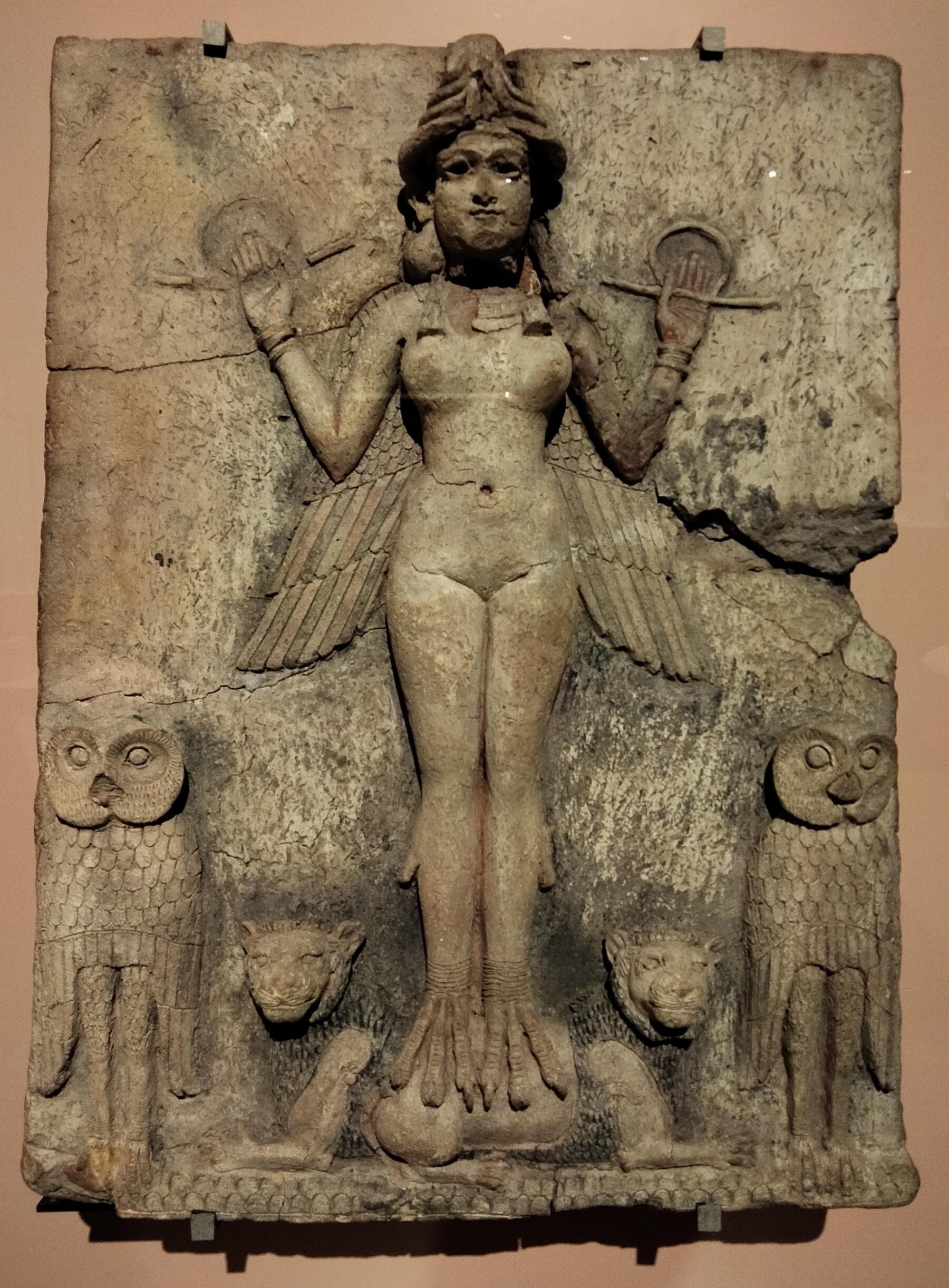
Representation of Inanna/Ishtar at the exhibition 'Venerated and Feared' at CaixaForum in Zargoza (Spain) December 2024 to March 2025. Loaned for the exhibition by The Trustees of the British Museum.Image at top: Terracotta plaque, showing the goddess Ishtar (Inanna), wearing the horned headdress and a necklace. 19th-17th century BCE. From Iraq. Pergamon Museum, Berlin, Germany.
Text